
Harvest of Hope
Nurturing CALD communities with dignity
About the project
The ‘Harvest of Hope’ project is a culturally responsive food relief initiative led by AfriAus iLEAC, in collaboration with 11 partner organisations under the LUVPACKS consortium. It aims to restore dignity
and improve the health of 1,500-2,000 vulnerable individuals from CALD communities across key Victorian LGAs, including Cardinia, Casey, Greater Dandenong, Frankston, Bondoora, Melton, Wyndham, Latrobe and Shepparton.
The Harvest of Hope initiative delivers practical food relief, food literacy, and community empowerment activities designed to support vulnerable individuals and families in a dignified and culturally responsive way.
Key activities include:
- Culturally appropriate food literacy workshops
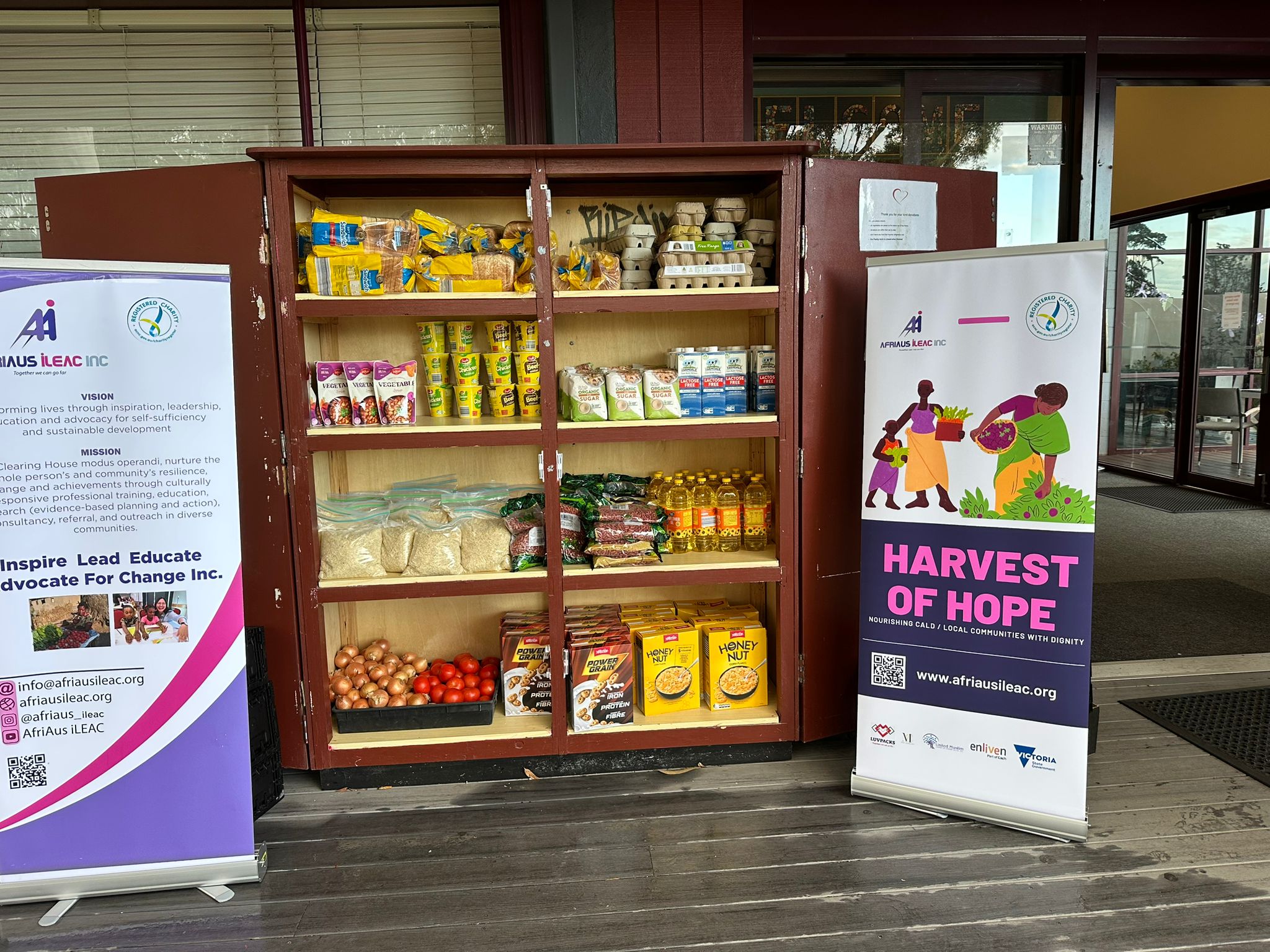
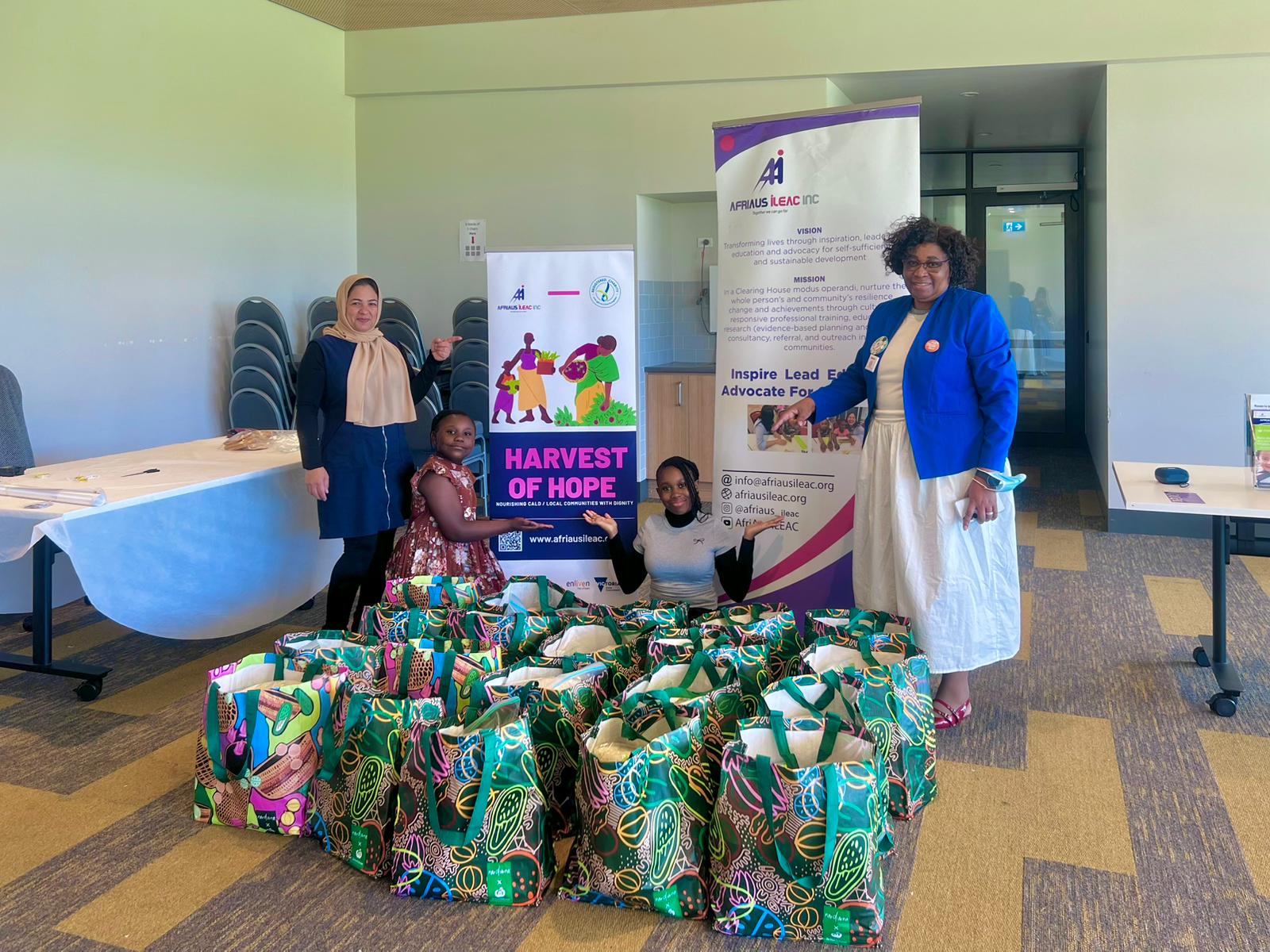
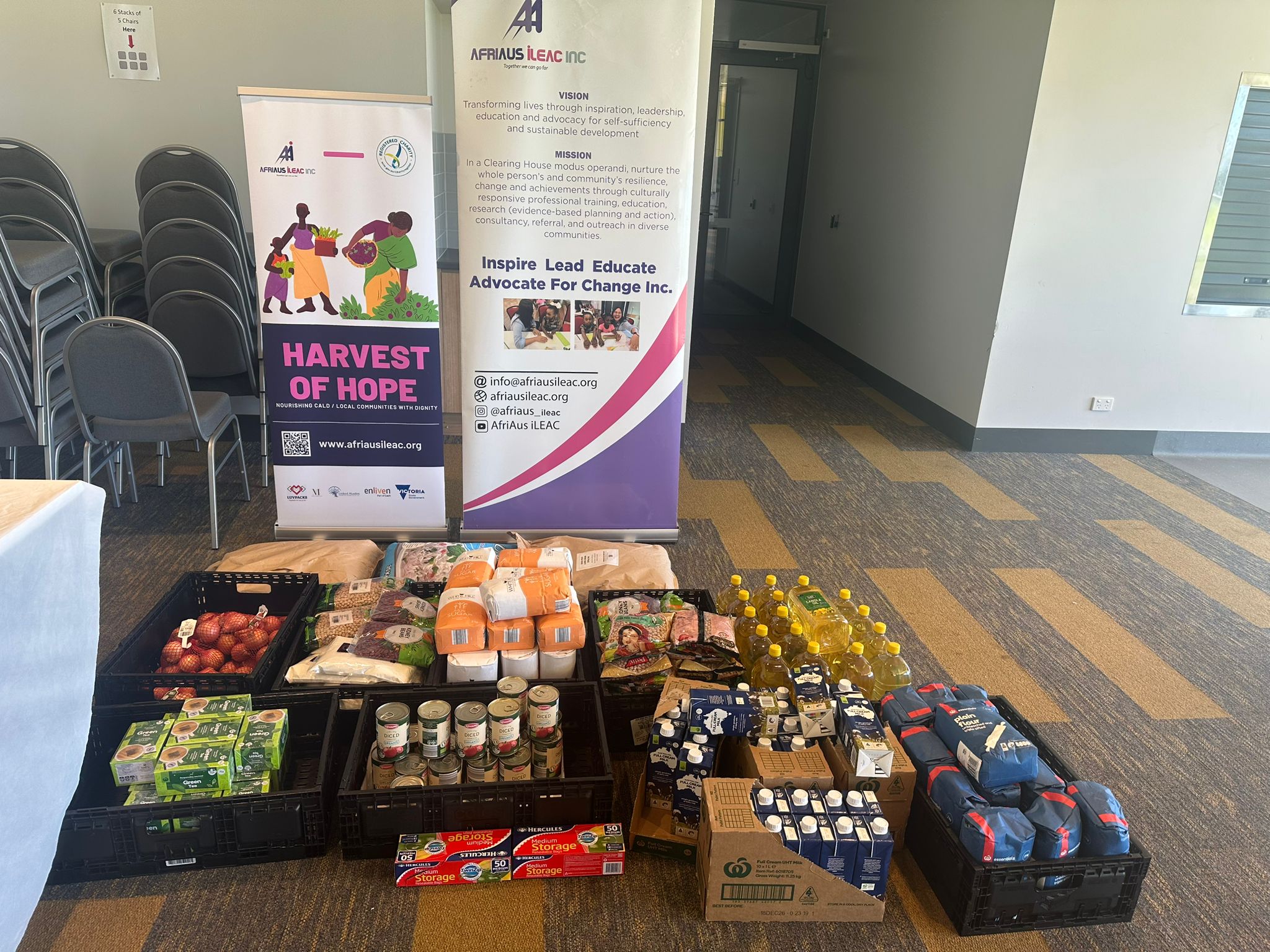
- Tailored food packs
- Food vouchers
- Pop-up markets
- Financial well-being training
The initiative aligns with and strengthens AfriAus iLEAC’s broader health, wellbeing, and empowerment programs supporting families, seniors, men, women, and young people.
Identified Community Need
Over 20% of adults in Victoria face food insecurity (Parliament of Victoria, 2023). CALD women are disproportionately impacted, especially those experiencing family violence. Many lack access to nutritious, culturally appropriate food, and have limited knowledge of financial management or healthy cooking.
Demand for food relief has doubled since 2023 in areas we serve (AfriAus iLEAC’s internal
data) Across the local government areas we serve, food insecurity disproportionately affects CALD communities, especially newly arrived refugees, women and children with medical conditions and/or a disability, seniors, and women experiencing gender-based violence. Many of these individuals face literacy, linguistic and cultural barriers, making it difficult to access mainstream services. For example, in Cardinia and Latrobe, over 50% of our referrals last quarter came from women who rely on our services as their only food source. AfriAus iLEAC has long championed equity in food access.
The lack of culturally appropriate options in emergency, prevention and intervention food relief alienates vulnerable groups. This project is a direct response to those gaps. We are not only feeding people, we are restoring agency, reducing stigma, improving health and wellbeing, raising self-esteem and strengthening resilience.
Supporting Communities with Dignity
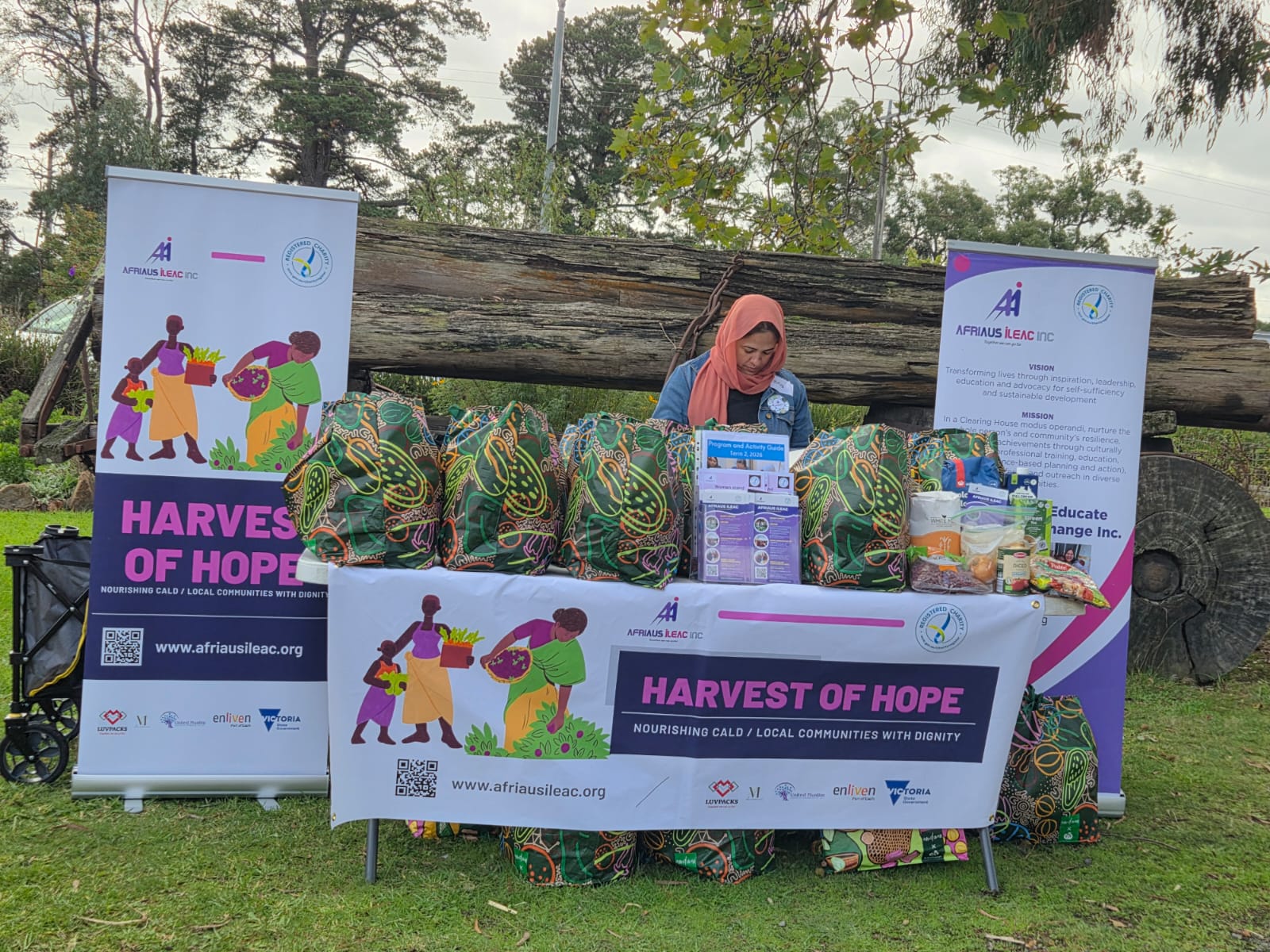
Partnership & Community Engagement
- Build partnerships with local food charities and community organisations
- Collaborate with local producers and suppliers for fresh produce donations
- Connect participants with complementary food security and support services
- Strengthen referral pathways between existing AfriAus iLEAC programmes and Harvest of Hope activities
- Develop community ambassador and volunteer networks to support ongoing program delivery
Food Relief & Distribution
- Coordinate food relief distribution to vulnerable community members
- Introduce fresh produce distribution through local donation partnerships
- Match food supplies accurately to participant needs to minimise excess and waste
- Implement bulk purchasing systems for cost-effective food provision
- Expand reach of existing food relief services through integrated programme delivery
Food Literacy & Education
- Deliver food literacy workshops focused on nutrition and healthy eating
- Facilitate peer-led cooking and food preparation sessions
- Train volunteers and ambassadors to continue delivering education sessions post-funding
- Provide practical education on meal planning, food storage, and reducing household food waste
- Conduct environmental awareness workshops linked to sustainable food practices
Why the Department is Funding this Activity
The Harvest of Hope initiative aims to ensure that:
- Individuals and families experiencing food insecurity can access healthy, fresh, and culturally appropriate food support in a respectful and dignified manner.
- Participants are empowered through food literacy education, peer-led workshops, and connections to community support services that strengthen long-term food security and reduce reliance on emergency relief.
- Community wellbeing is strengthened through sustainable partnerships with local producers, food charities, and community organisations that continue beyond the funding period.
- Environmental sustainability is promoted through waste minimisation practices, compostable packaging, bulk purchasing, reusable items, and responsible food distribution systems.
- Existing AfriAus iLEAC programmes are enhanced through the integration of Harvest of Hope activities, creating a seamless extension of support that expands community reach and impact.
Activity Start and End Date
01/12/2025 to 30/06/2027
Target Audience
- Culturally and linguistically diverse communities
- Immigrants and migrants
- Refugees and asylum seekers
- Particular religious groups
- People living with disability
- People experiencing homelessness
- International students
Harvesting hope for tomorrow: Long-Term Impact & Sustainability
Sustainability & Environmental Initiatives
- Use compostable packaging in food distribution activities
- Promote reusable items and minimise single-use materials wherever possible
- Implement waste reduction practices, including precise food allocation and stock management
- Encourage landfill reduction through sustainable packaging and food recovery practices
- Educate participants on environmentally sustainable food habits and waste minimisation
Capacity Building & Programme Continuity
- Recruit and train community volunteers and peer facilitators
- Develop long-term sustainability plans for post-funding programme continuation
- Strengthen organisational partnerships to reduce reliance on emergency relief models
- Integrate Harvest of Hope with existing AfriAus iLEAC community programmes for greater impact
- Monitor and improve programme effectiveness through ongoing community engagement and feedback
Calendar of our events
UPCOMING- to be announced
PAST
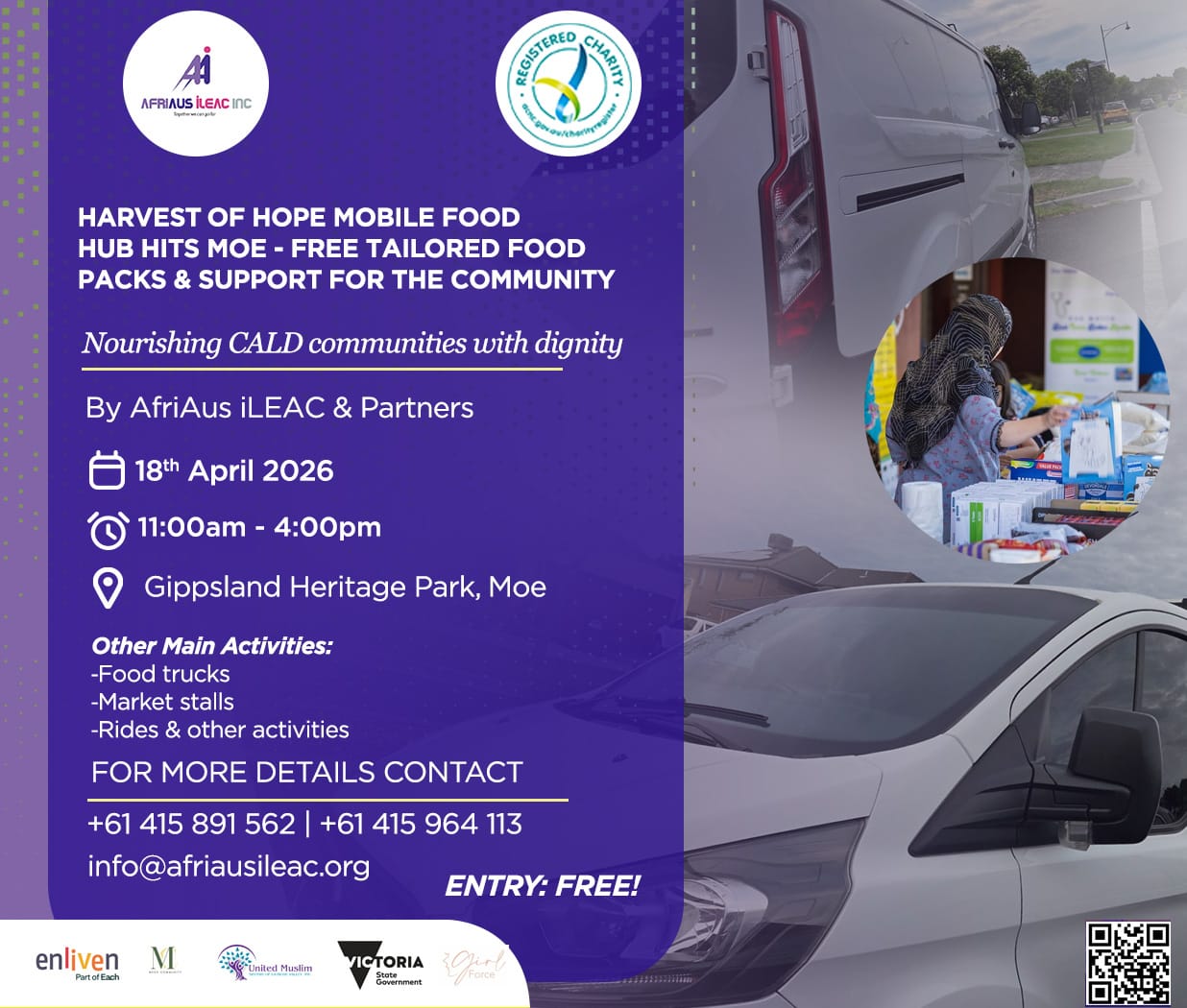
Moe- 18th April 2026, 11:00am to 4:00pm
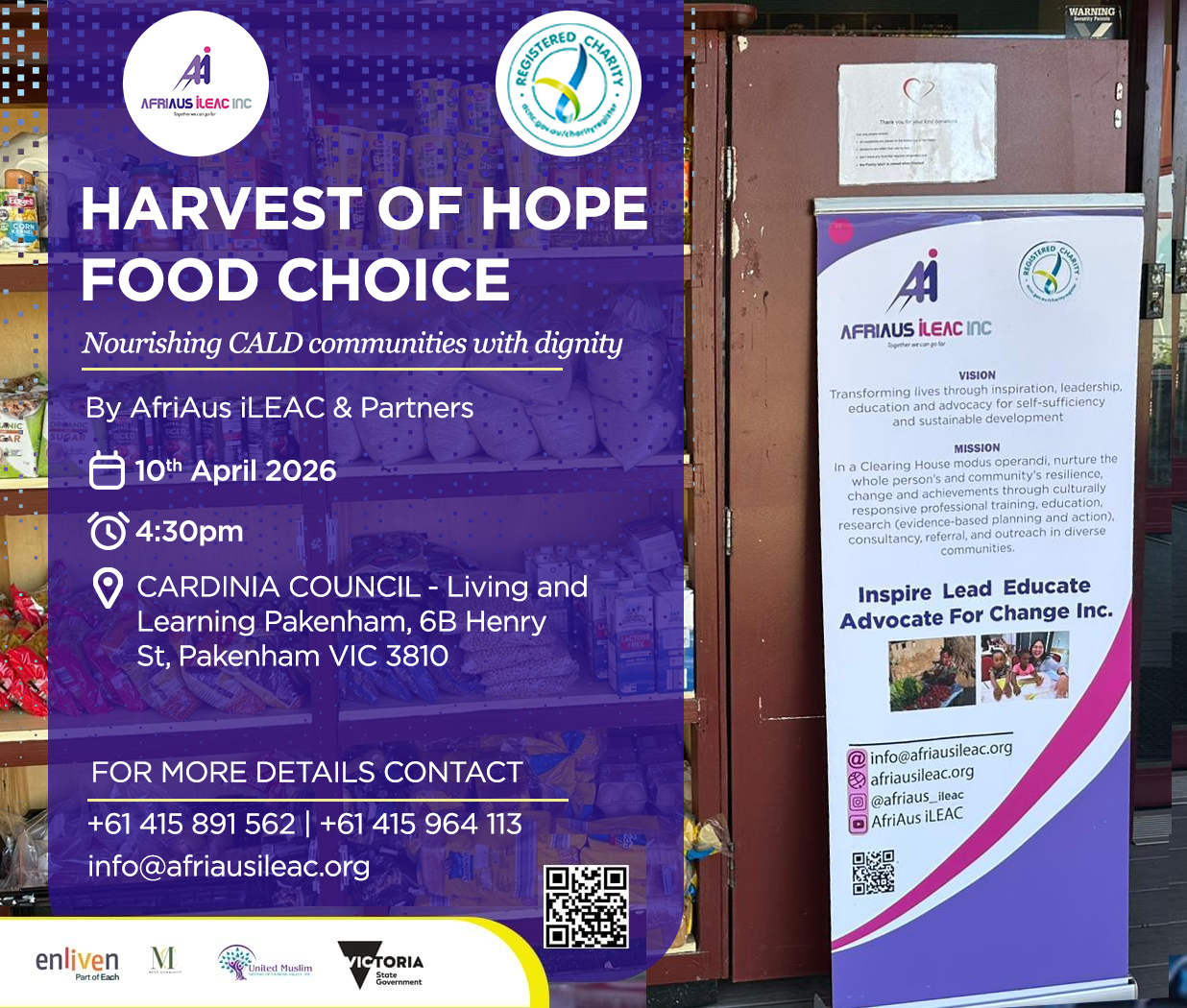
Cardinia Shire– 10th April 2026, 4:30pm
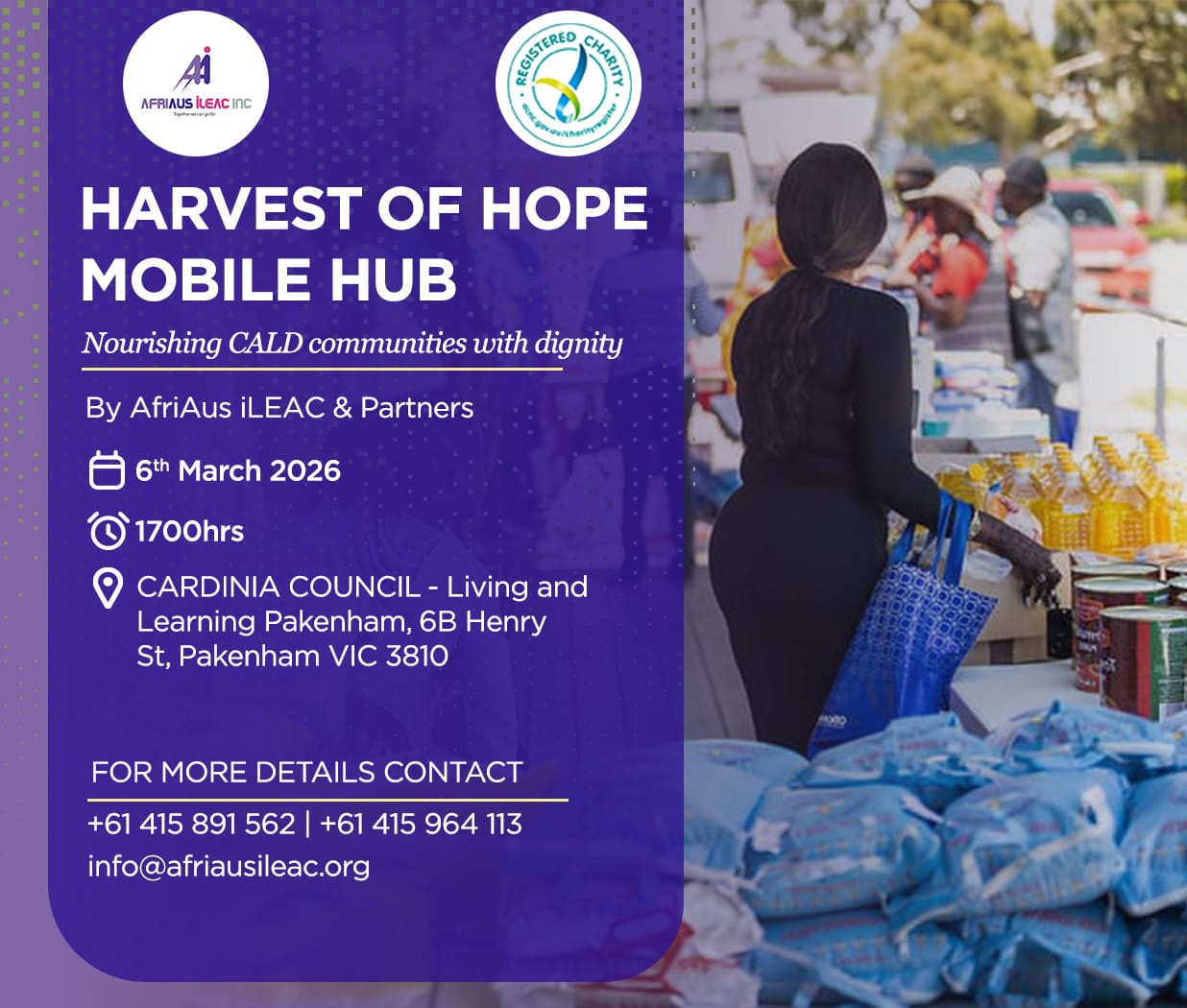
Cardinia Shire– 6th March 2026, 5:00pm
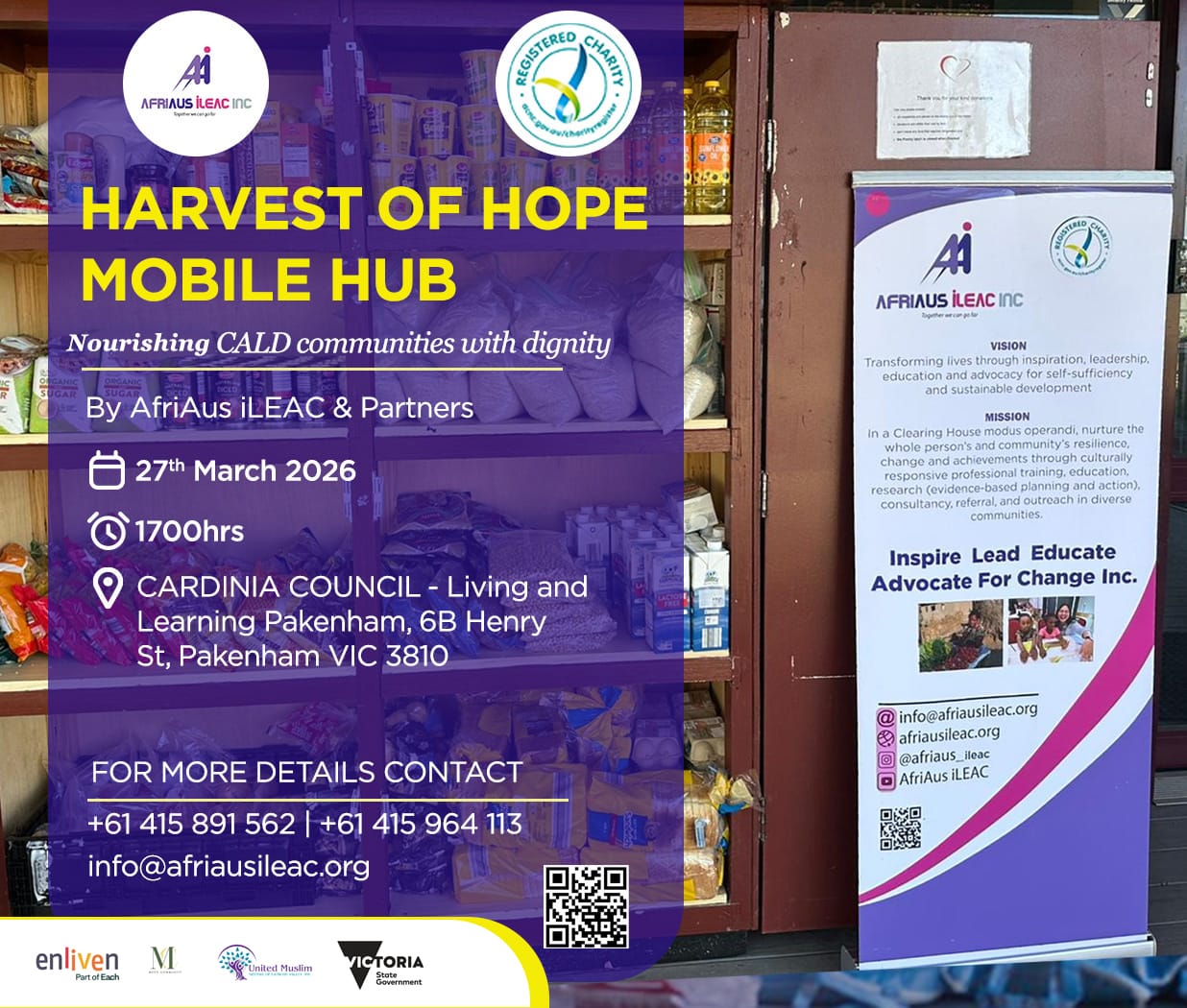
Cardinia Shire– 27th March 2026, 5:00pm
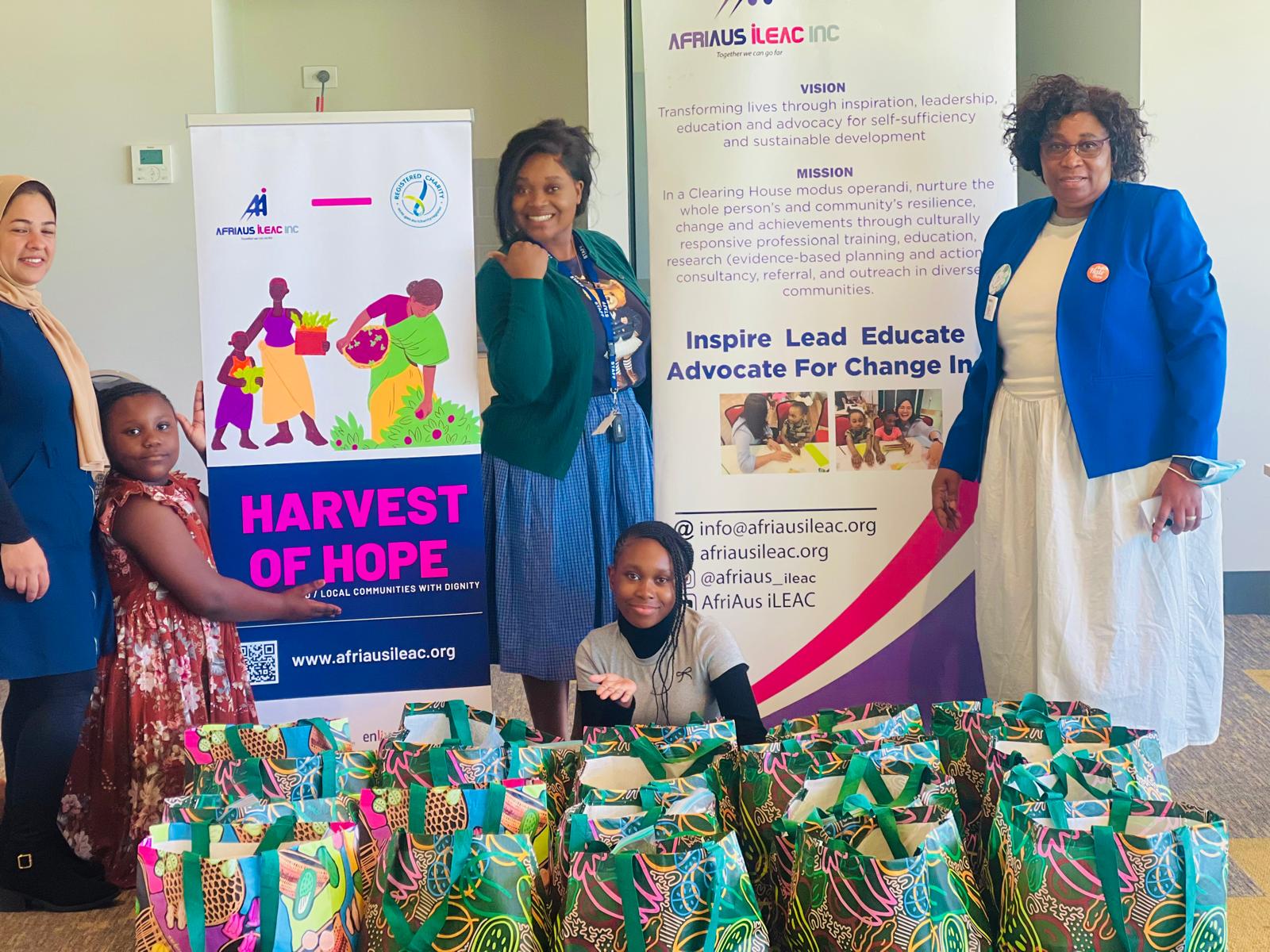
Harvest of Hope Launch
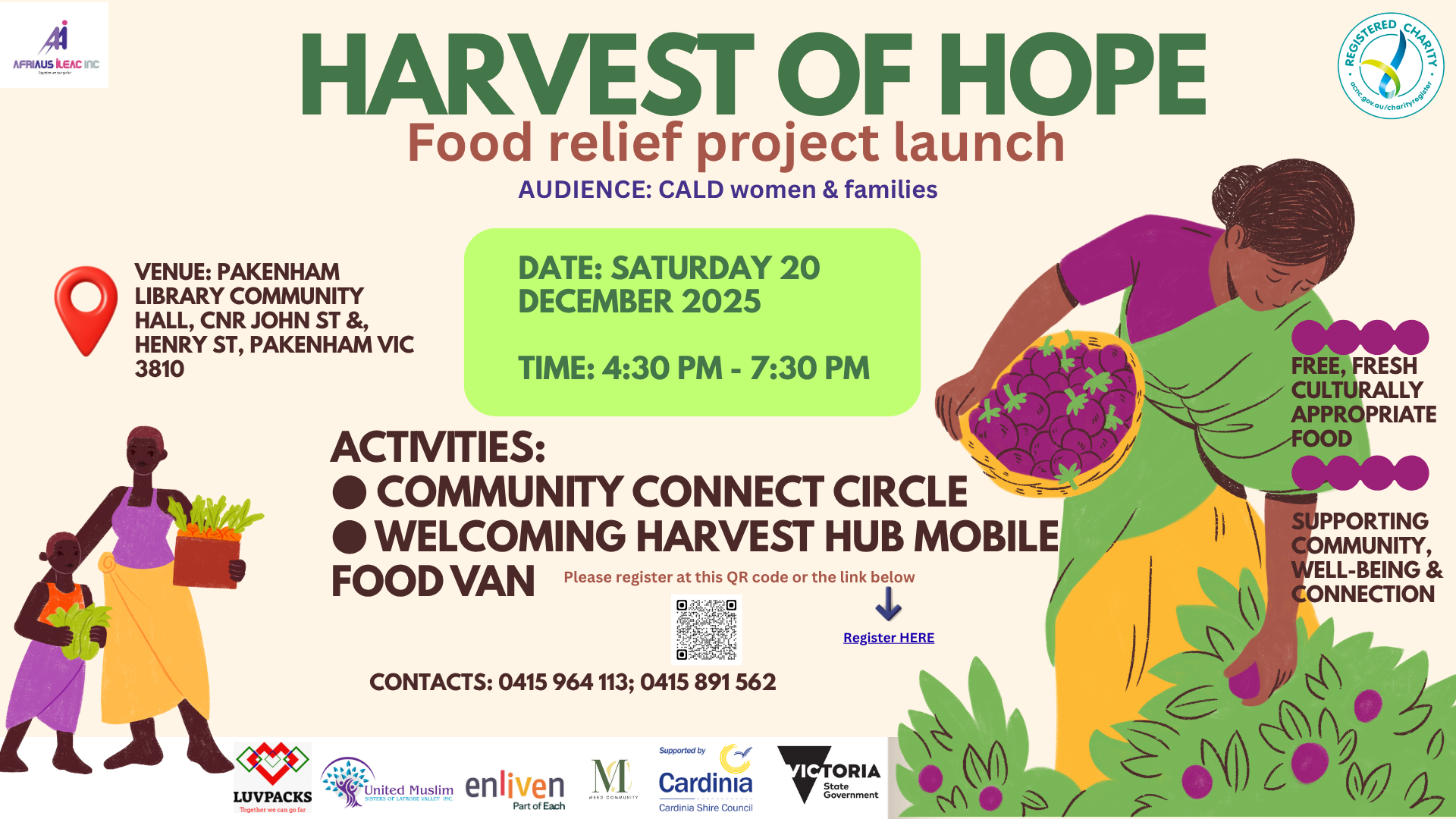
Download the flyer in URDU
Download the flyer in ARABIC
Download the flyer in AMHARI
Download the flyer in BURMESE
Download the flyer in HINDI
Download the flyer in PUNJABI
Download the flyer in DARI
Download the flyer in NUER
Photo Gallery

Harvest of Hope-2026
Partners




Get In Touch
6B henry St, Pakenham, VIC 3810
Email: info@afriausileac.org